How much strength training do you actually need?
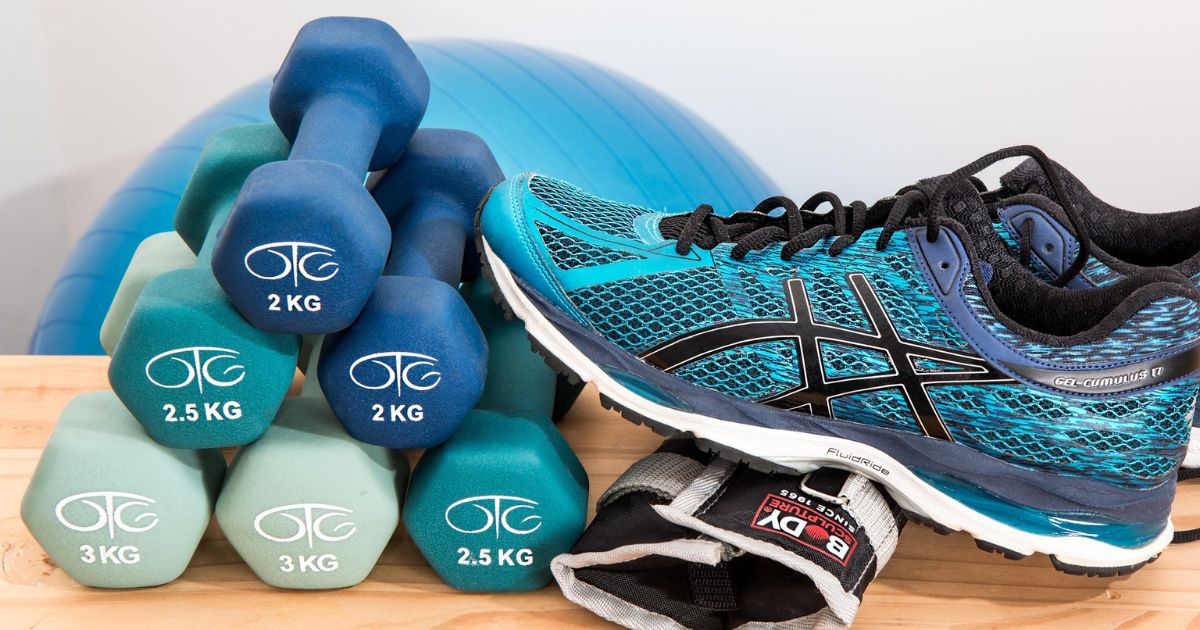
We’ve written before about why endurance athletes should lift — the running economy gains, the lactate threshold improvements, the tendon stiffness changes that make you more efficient at the same effort. The performance case is well established and it isn’t really argued about any more.
The question we actually get asked in the clinic is different. It isn’t why. It’s how much, and the unspoken second half of the question is how much can I get away with, because every hour in a gym is an hour not swimming, riding or running.
A study published in the British Journal of Sports Medicine in May gives the most useful answer we’ve had. And it’s good news for anyone who’s been avoiding the gym on time grounds.
The number
Researchers followed 147,374 people for up to 30 years, drawing on three long-running cohorts — the Health Professionals Follow-up Study and both Nurses’ Health Studies. Participants reported their strength training and aerobic exercise every two years across that period.
People doing 90 to 119 minutes of strength training a week had a 13% lower risk of dying from any cause than those doing none. The same range was associated with a 19% lower risk of death from cardiovascular disease and a 27% lower risk from neurological disease.
Then the interesting part. Above 120 minutes a week, the benefit stopped increasing.
Be careful how you read that. It does not mean more training is harmful — the study found no penalty for doing more. It means the mortality benefit levels off. Somewhere around two hours a week, you’ve collected essentially all of what resistance training has to offer on this particular measure.
Two hours. Two sessions of an hour, or three of forty minutes.
Why this matters more for endurance athletes than most people
Here’s the part that should land if you’re training for Busselton, or a marathon, or a half.
The same study looked at what happens when you combine both types of training. Participants doing strength work and aerobic exercise had among the lowest mortality risks in the entire dataset — up to 45% lower than people doing neither.
You already have the aerobic half. Comprehensively. You almost certainly do more aerobic exercise in a week than the study’s highest category.
What that means is that the marginal return on your next aerobic hour is small — you’re deep into diminishing returns on a curve you’ve been climbing for years. The marginal return on your first ninety minutes of strength work is not. It’s the largest available gain in your week, and it costs two sessions.
That is a very different argument from “lifting will make you faster.” It might well make you faster. But even if it didn’t, the case would hold.
One genuinely odd finding
Not everything in the data pointed the same direction. The cancer mortality benefit appeared at much lower doses — in the range of well under an hour a week, and it did not increase with more.
We’d treat that cautiously rather than build a training plan around it. But it does support the researchers’ own conclusion, which is that different amounts of resistance training may be needed to optimise different outcomes. There isn’t one perfect number.
What the study can’t tell you
Worth being straight about the limits, because they’re real.
This is observational. It shows association, not cause. People who lift weights for thirty years differ from people who don’t in a hundred ways researchers can’t fully adjust for.
The activity data was self-reported every two years, which is a blunt instrument for something as variable as training.
And critically for our purposes: the study recorded no information on intensity or session structure. It counted minutes. It didn’t know whether those minutes were heavy squats or light circuits. It also excluded calisthenics and Pilates from its definition, so some people’s genuine strength work went uncounted.
The health dose and the performance dose are not the same dose
This is where the two halves of the argument separate, and it’s the thing most articles about this study miss.
Ninety minutes a week of something resistance-based appears to be enough for the longevity benefit. Minutes seem to be what counts.
The performance benefits are a different matter. The improvements in running economy, lactate threshold and time to exhaustion covered in our earlier post came from studies using heavy resistance training — specific loads, specific progressions, done consistently over months. You don’t get an 8% running economy improvement from ninety minutes of anything. You get it from ninety minutes of the right thing, progressed properly.
So the honest answer to “how much do I need?” is: it depends what you want.
If you want the health return, two hours a week of consistent resistance work will very likely get you most of it, and you can stop worrying about whether it’s enough.
If you want the performance return — faster at the same effort, more durable late in a race — the volume is similar but the specificity matters enormously, and that’s the part worth getting help with.
Where to start
Two sessions a week, forty-five to sixty minutes. That hits the range with room to miss one occasionally.
Put them where they won’t compromise key sessions. Same day as a hard run rather than the day before is usually the better trade.
Progress the load. The single most common mistake we see is the same weights for eight months. Minutes counted in the study; load is what drives adaptation.
Don’t start a new lifting programme in the final six weeks before a goal race. Build strength in the base phase, maintain it in the specific phase.
On Form Physio is Perth’s dedicated endurance sport clinic, in Yangebup and Rockingham. Our Endurance Performance Assessment looks at where your physical capacities actually sit against what your sport demands, and builds a plan that improves the priority without eating your training volume.
Book an assessment or call (08) 6385 8029.
Sources
- Zhang Y et al. Long-term resistance training with all-cause and cause-specific mortality: assessing dose-response and joint associations with aerobic physical activity. British Journal of Sports Medicine, 2026. DOI: 10.1136/bjsports-2025-110503 — BMJ summary · Harvard Chan summary
- Performance evidence as cited in our earlier post: Blagrove et al. 2018; Rønnestad & Mujika 2014
Ready to book an appointment?
Our team is here to help — whether you have a question about your injury or you’re ready to get started.